Calgary Arts Development ↗︎
Since 2025
Supporting and strengthening the arts to benefit all Calgarians


Since 2018
Partners Development Group is a Calgary-based land developer creating thoughtfully-planned communities across the city. What started as a single website engagement evolved into an ongoing partnership spanning a corporate capture page and a suite of community microsites, eventually resulting in a cohesive digital infrastructure that makes launching new community sites faster, smarter, and more consistent.
A Calgary-based builder with over two decades of experience developing planned communities, Partners Development Group came to us in 2019 with a portfolio spanning duplexes, townhomes, and distinct community identities that each needed room to breathe, without the overall site losing its design thread.

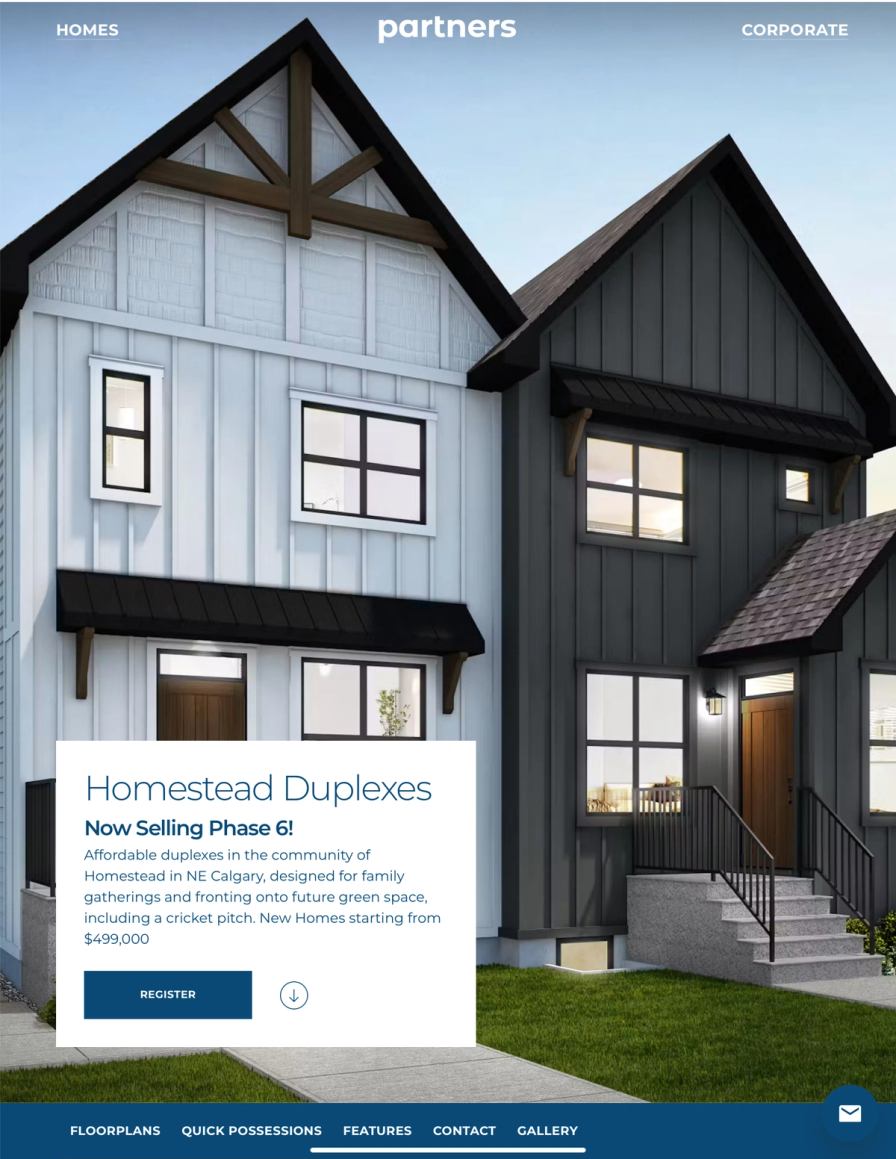

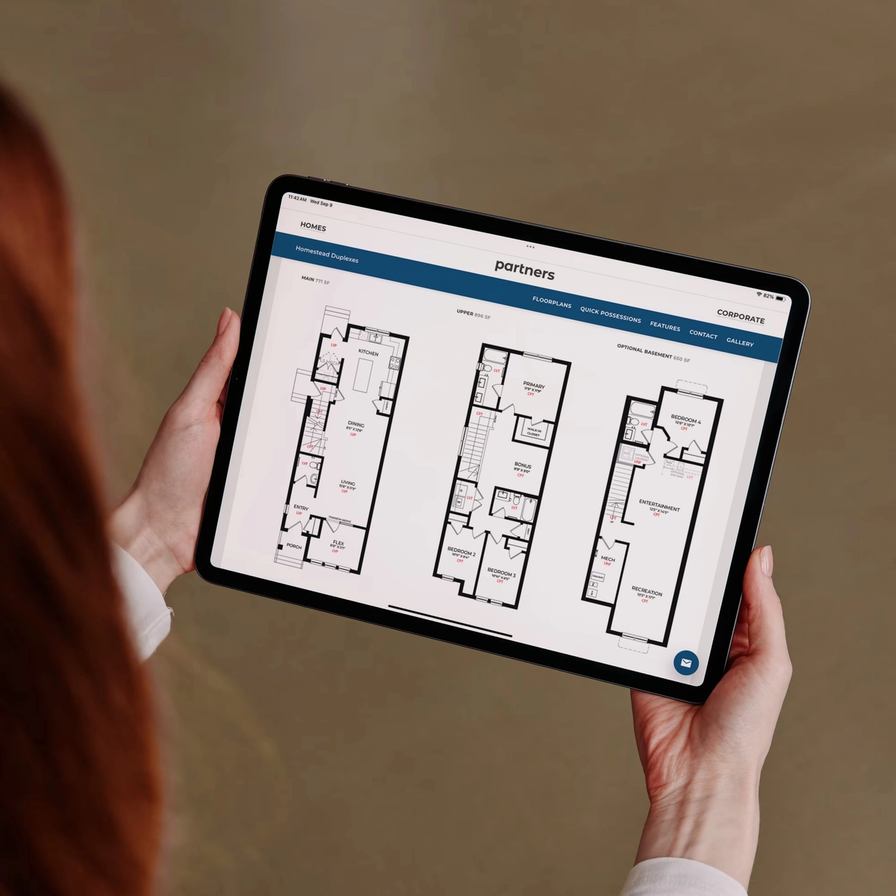

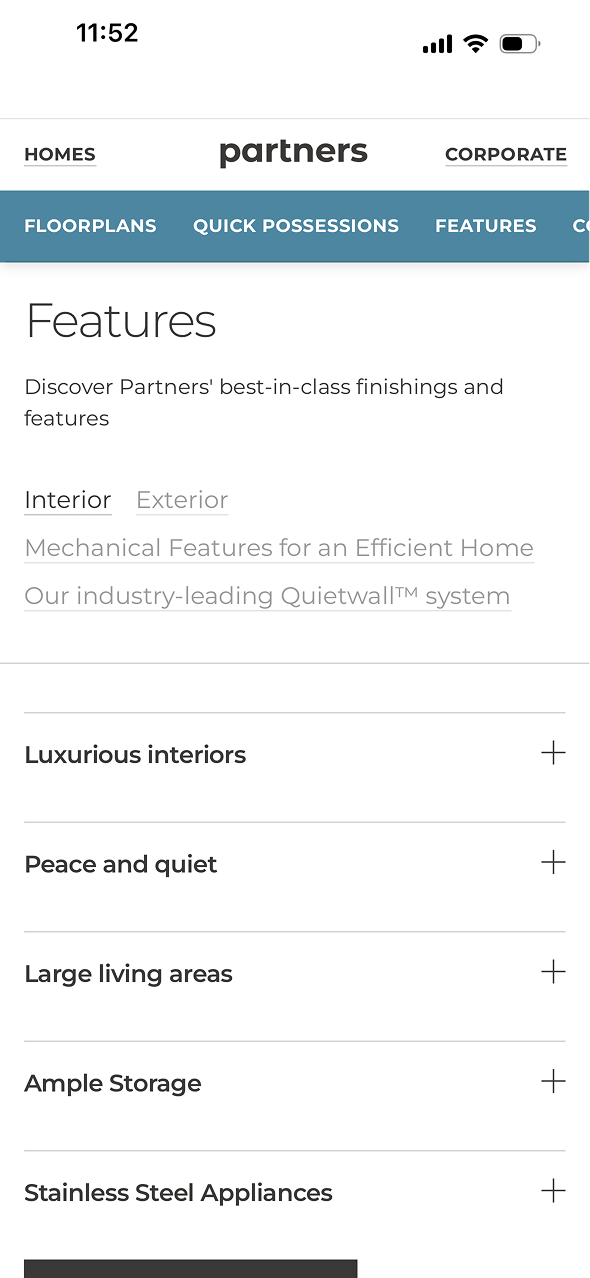

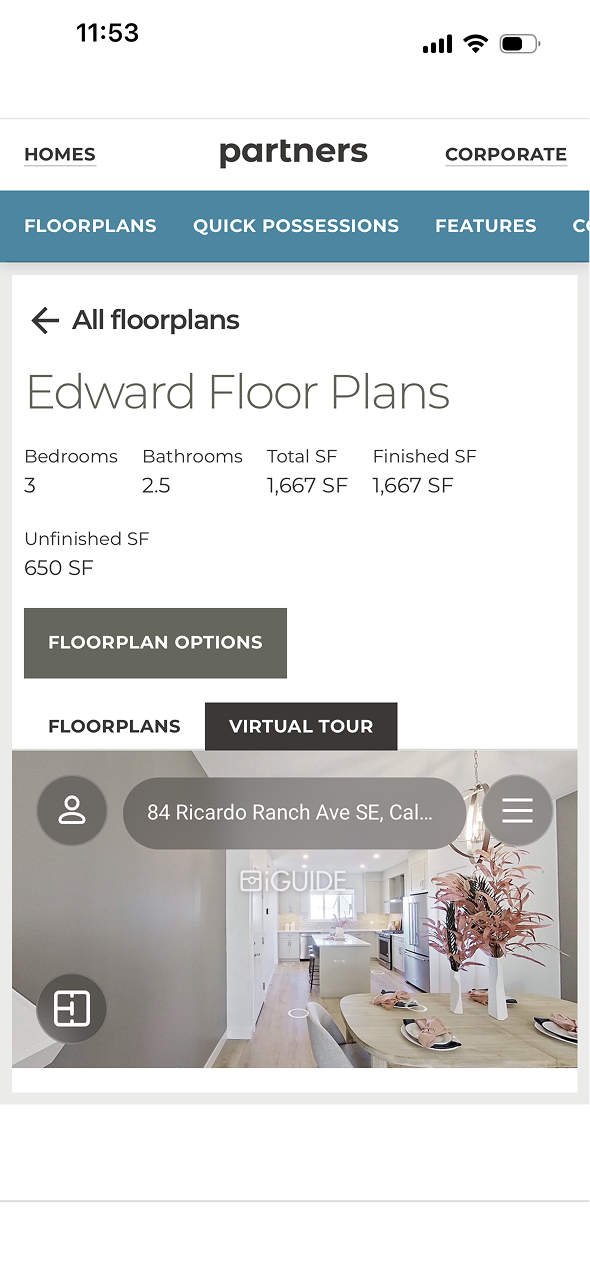
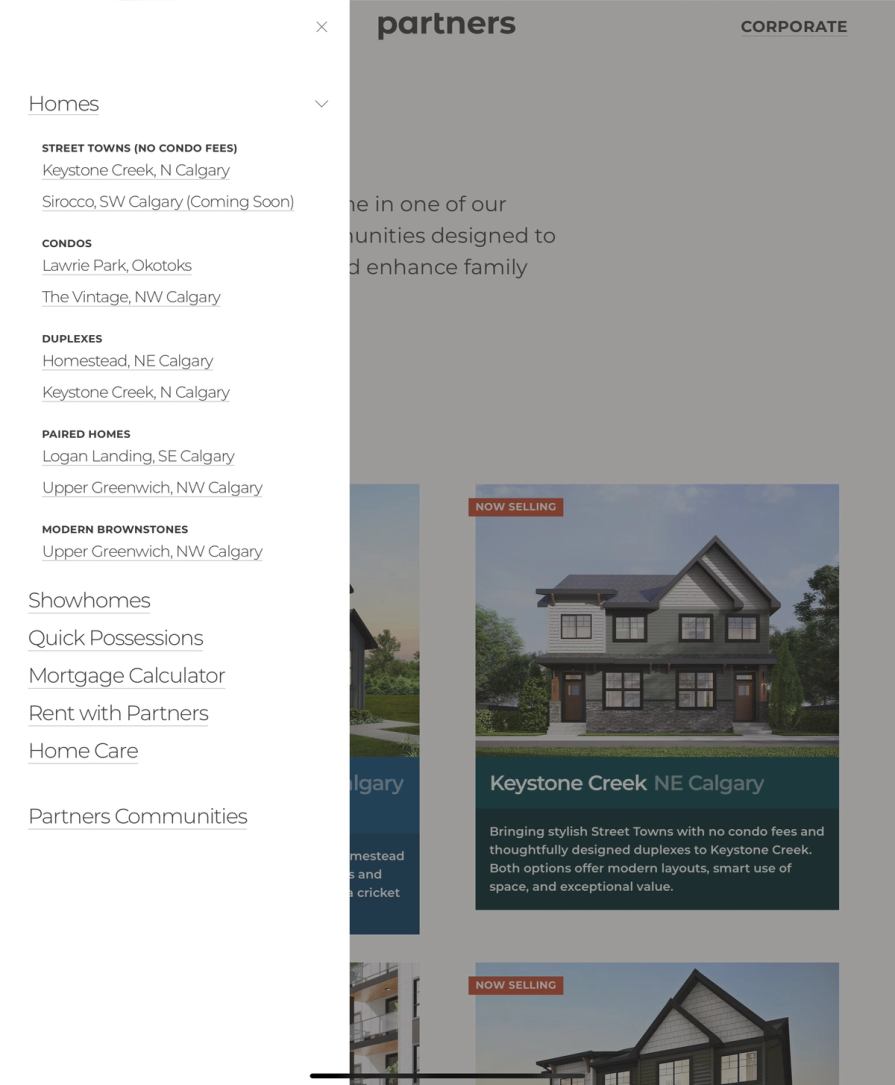
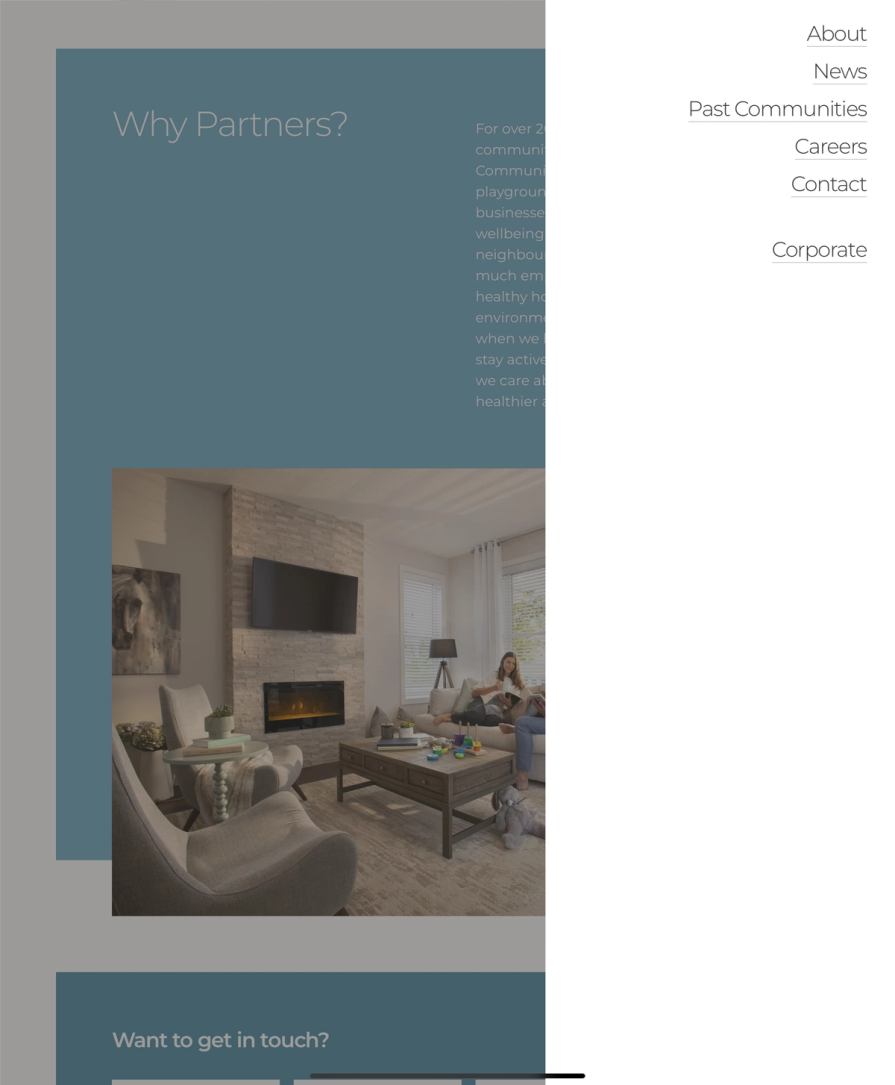
The architecture we designed made way for a dual side-nav system, placing community links on the left and corporate links on the right, separating two wings that Partners needed to communicate separately. We implemented smooth page transitions to pace the browsing experience, lending the site a relaxed energy that felt consistent with how Partners talks about its communities. We themed each community with a different primary colour, while abstracted vector curve patterns, reminiscent of tilework, added texture to the background without competing with the pages’ foreground content.


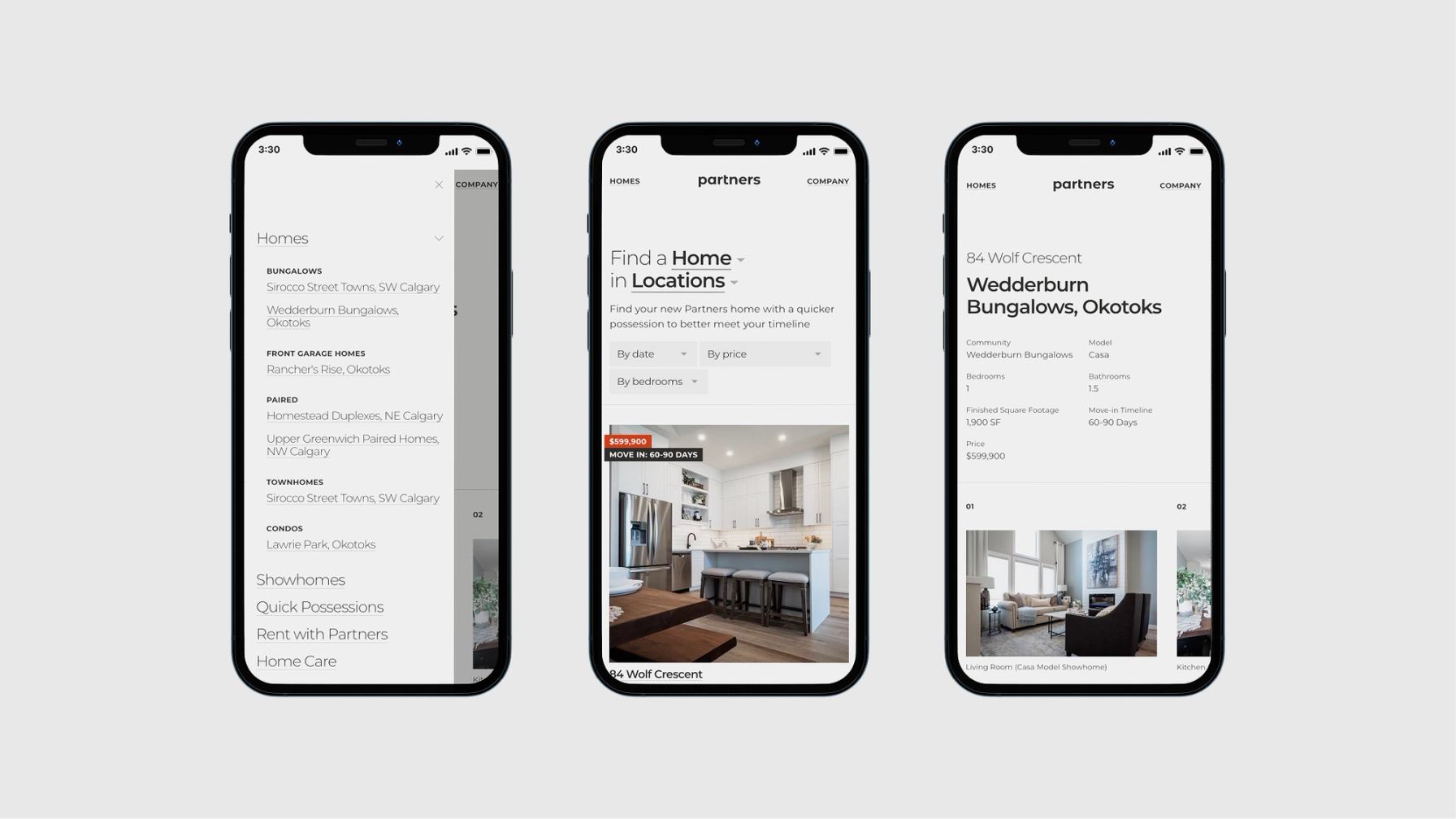
A Quick Possession Homes feed surfaced immediately-available units for time-sensitive buyers, and we embedded Matterport VR tours directly into gallery sections. Google Maps integrations gave prospective buyers a real picture of each community's surrounding amenities, and a showhomes list organized by community made it straightforward to find and contact the right team member when needed.

Years after releasing the site, Partners returned in 2023 with a new challenge: a highrise content type that currently didn’t fit into their existing platform. Highrises needed floor plans, unit availability, and multi-storey navigation that required a level of interactivity the current community pages weren't built for.
We built the new Highrise content type natively inside Prismic, giving editors direct control over unit availability without a third-party integration. Floor plates were constructed as SVGs, abstracted by our team from Partners's detailed architectural drawings, with Prismic content fields tied to the opacity and hover states of individual units. A floor selector lets visitors move between levels independently to view floorplans in context. Two separate Highrise properties launched using this same model.


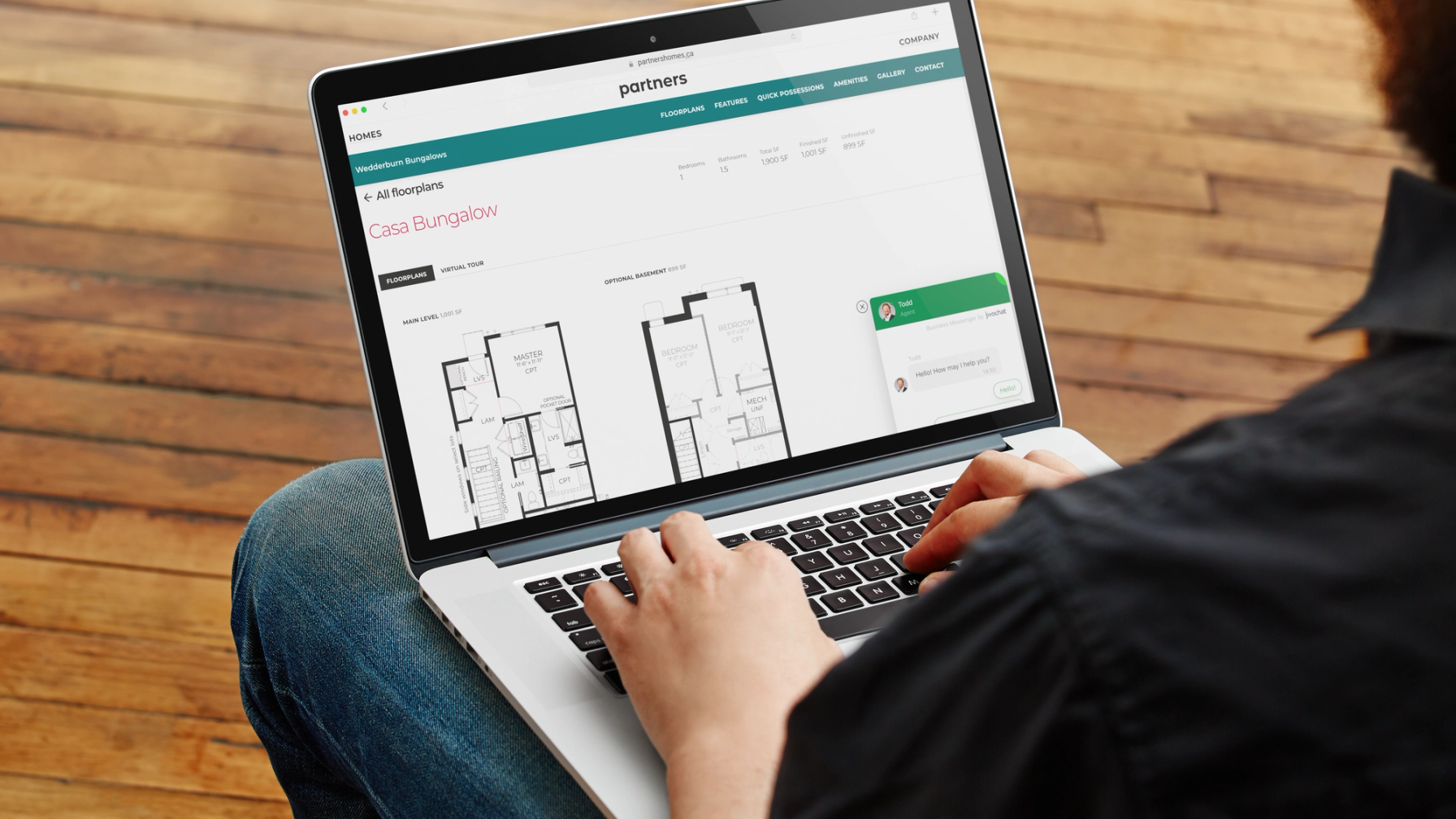
The original site, built on Gatsby and Prismic, launched in late 2019, with the Highrise content type following in November 2023. By building with future accommodations in mind, the Partners Development Group website has become a growing, extending platform that can change with the organization as needed.
How do you build a digital presence for a developer who’s always building? Partners Development Group faced this issue: each new project demands its own identity, its own launch, its own site, and if those sites are built in isolation, the cost compounds every time. What started as a single microsite engagement in 2020 grew into a shared digital infrastructure built to become more useful with each new community it absorbs.
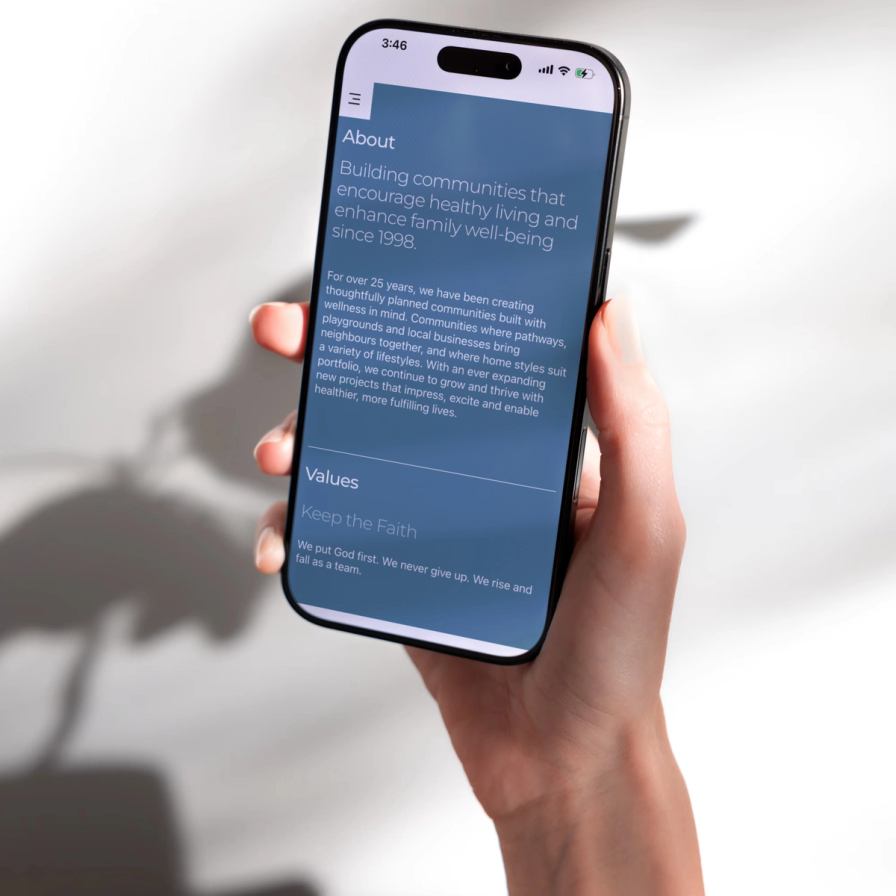
Not every digital problem needs a full website. Partners needed a corporate home to communicate who they are, what they build, and how to reach them, without the editorial overhead of a multi-page site.
We ran strategy sessions with their team to understand how to compress a business spanning land development, commercial projects, and community building into a single coherent page. That process led to a small but purposeful branding package with colour work and logo marks, before moving into wireframing, design, and build. The result is a page that earns its restraint: no navigation, no content hierarchy to maintain, no reason to be anything other than what it is. It launched in mid-2022 using Next.js and Prismic.



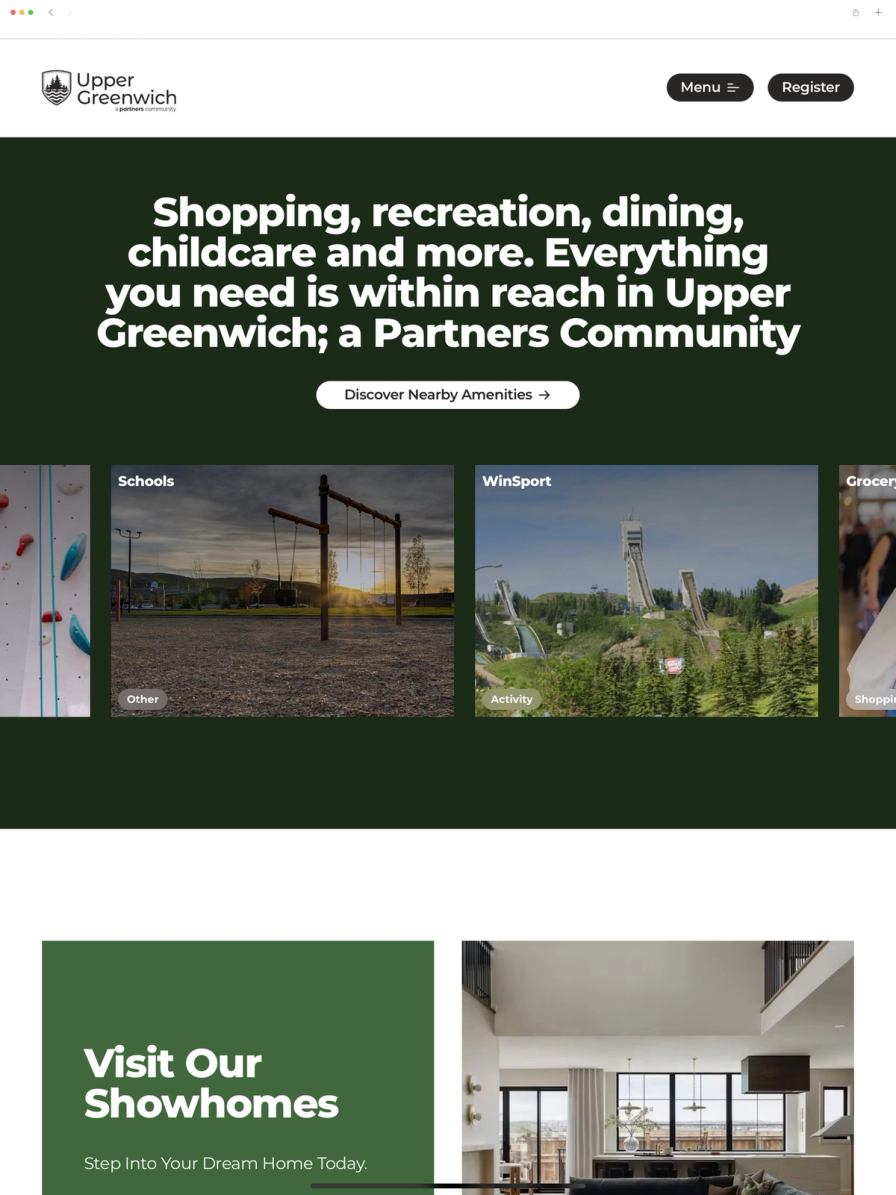
The Upper Greenwich engagement followed a similar arc to Homestead, with us handing strategy through deployment. The site opens with a side menu set against full-bleed imagery, with a fade-in/fade-out transition that gives navigation an unhurried, polished quality.
The amenities section is where the interaction design does its most interesting work. A three-tiered carousel presents each amenity as an entry point, with smooth scrolling links opening detailed content in a sidebar. This keeps pages from becoming dense while still delivering substantial information. The site launched in February 2023, built with Next.js and Prismic.


Partners came to us in early 2024, needing a microsite for Keystone Creek: their newest community in north Calgary's Keystone Hills area. The brief was straightforward, but it opened the door for a deeper conversation.
Their Homestead site, built on Gatsby several years earlier, was aging. More significantly, Partners was planning several new community launches in the years ahead, and building another standalone site would have meant repeating the same foundational work each time. We proposed that instead we build a single shared codebase capable of powering multiple sites, each running off its own Prismic repository with its own visual identity. Any modular slice added for one site would become available to all of them, so the Homestead codebase could be refreshed in the process of building Keystone Creek’s site.
To achieve this, we needed to build a colour theming system flexible enough to let Prismic editors define new themes for each site. The site launched in 2024 on Next.js with Prismic, and when Partners later rebranded Keystone Creek’s vivid red with a deep, subdued teal, the site adapted easily without any structural change. The system had been built to handle exactly that kind of decision.
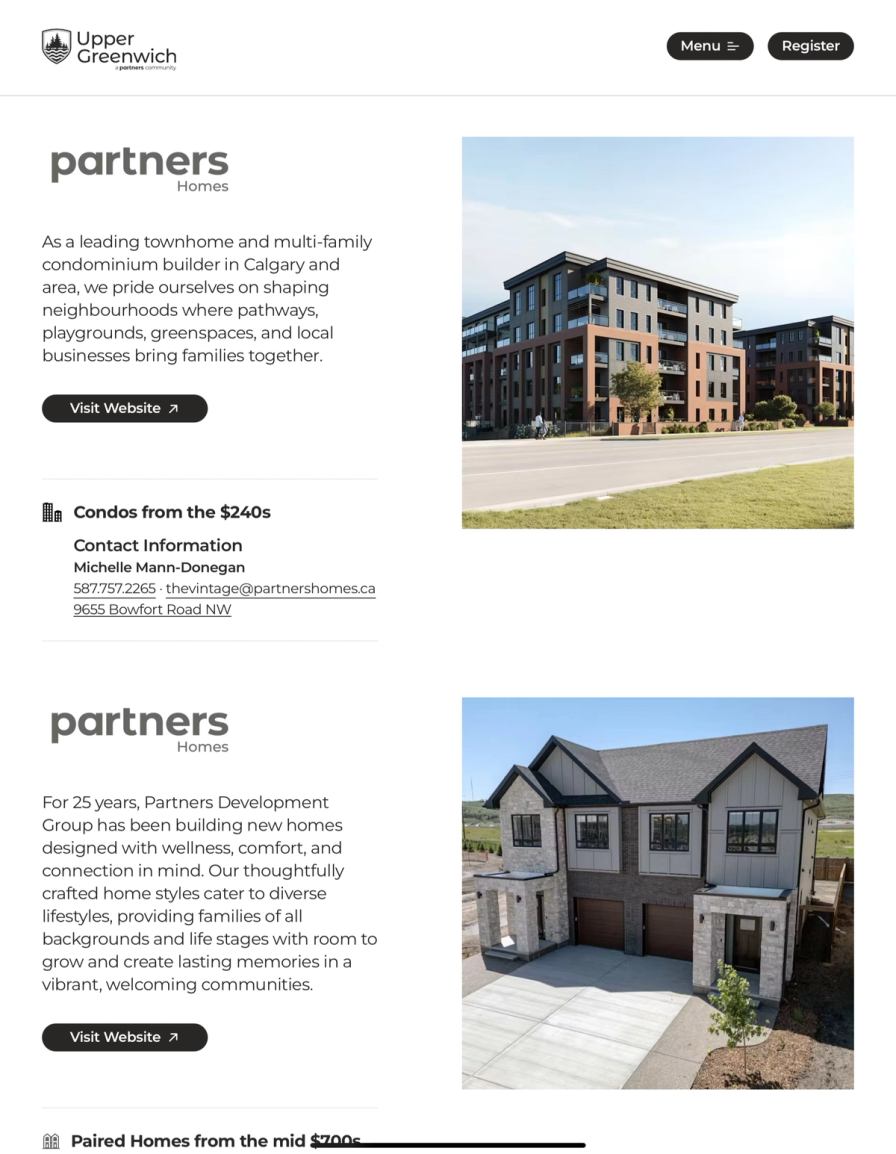
When Partners's signage company installed branding for their new apartment project ahead of schedule, they needed a microsite, and they needed it fast.
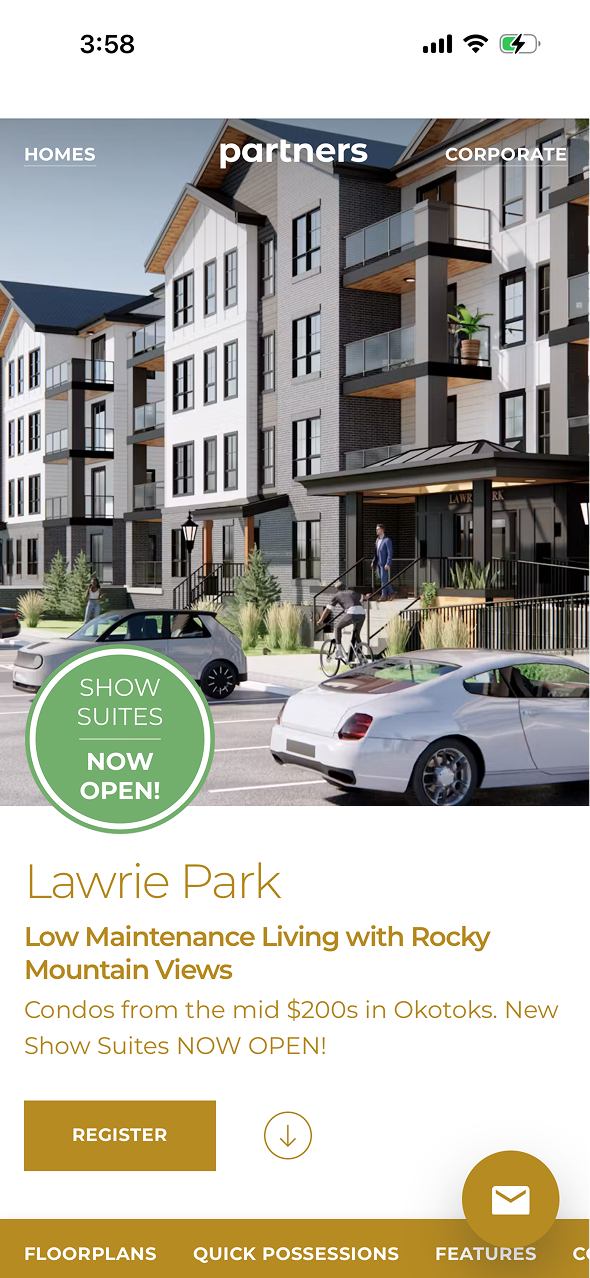
Because of the shared codebase built across Homestead and Keystone Creek, we were able to oblige. The Vintage's microsite went live within a single day, and it was clean, well-structured, and consistent with the visual standards of its sibling sites. This microsite served as a polished placeholder while the folks at Partners determined what to do next.
This expedited launch was only possible because of decisions made years earlier. Good information architecture is rarely visible until the moment it needs to perform, and when it’s really needed, it makes all the difference.
Supporting and strengthening the arts to benefit all Calgarians


Compelling solutions for an organization with a clear voice
Building a brand and online home, layer by layer